
Raritan Township Previous Resident Sources
A past-address search has two tracks. The title track identifies the people or entities that held a parcel through recorded transfers. The household track looks for people connected to that place in census, newspaper, probate, and historical material. Start with the County Clerk for the title track. Hunterdon County says its records from 1785 to date are recorded and available on request, but it does not publish an exact online index cutoff. This matters because an online result is not the full reach of the record room.
| Source | Years | Held | Shows |
|---|---|---|---|
| Hunterdon County Clerk records | 1785 to date, recorded and available on request | County Clerk Record Room, 71 Main Street, Flemington | Deeds, parties, recording details, legal descriptions, and related land instruments. |
| County manuals and directories, Collection 270 | 1881 to 1997, with gaps | Hunterdon County Historical Society archive | County and municipal officials, annual offices, budgets, and names in public roles, not a complete household list. |
| Federal census microfilm and indexes | HCHS microfilm 1830 to 1910; Archives indexes through 1950 | Deats Memorial Library and New Jersey State Archives resources | Household names, ages, birthplaces, occupation, and residence context. |
| County deed microfilm and digitized deeds | Archives microfilm through 1900 | New Jersey State Archives and FamilySearch | Earlier deed access when the County Clerk search moves before a readily available image. |
Past residents may not be the past owners. A tax-list owner can differ from the person at the property, and the research did not verify a Raritan Township residential or reverse directory run. Keep each conclusion labeled by what the source actually proves.
Note: The official County Clerk page confirms records exist from 1785 to date, but it does not state an exact online search cutoff.
Raritan Township Deed Records
The Hunterdon County deed-search guide gives a practical starting point for a Raritan Township property: get the current owner and the block and lot from the tax bill or Assessor, then bring a tax-map copy to verify the parcel. This is stronger than relying on a street address alone. A road can change, a large tract can divide, and an old deed can identify land by a legal description or neighboring parcel.
The guide is pictured below because its starting point matches the local workflow. It directs the researcher to current owner, block, and lot before beginning the grantor-grantee sequence.
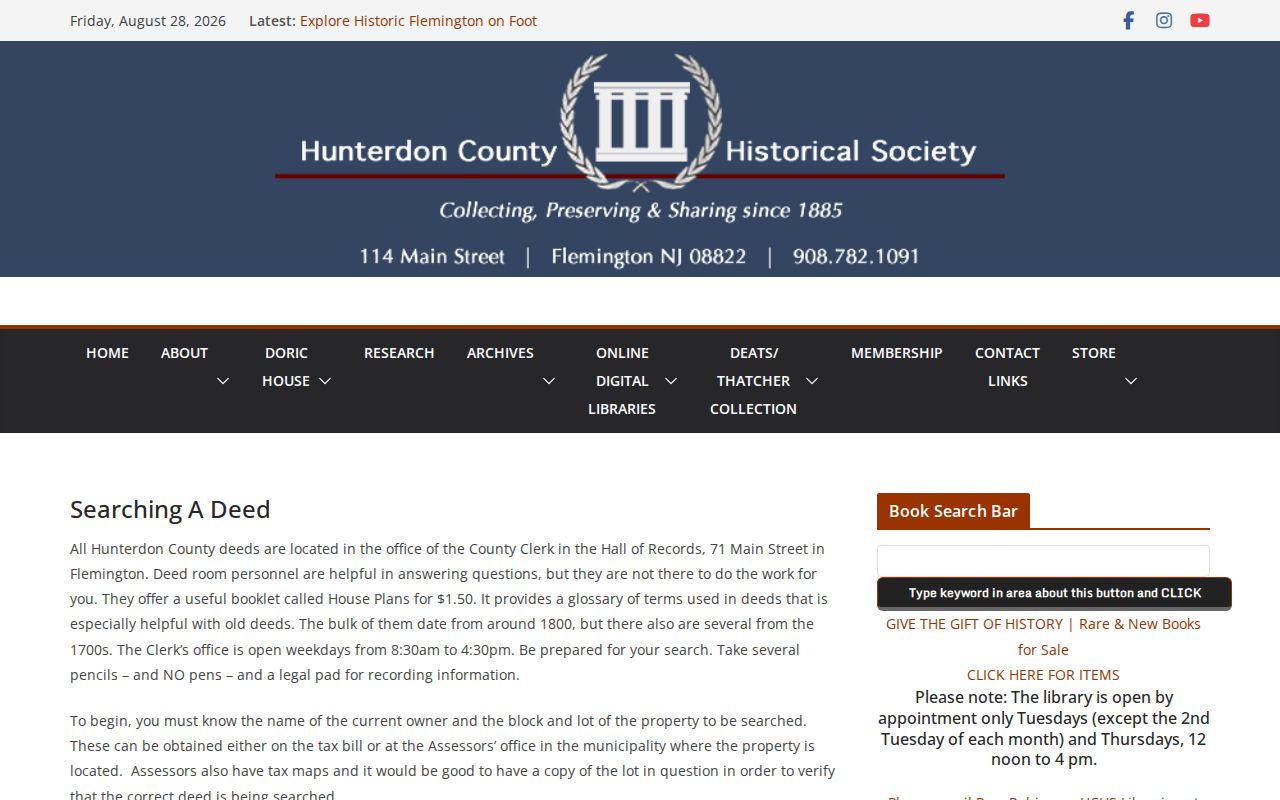
That parcel key makes it less likely that a previous-residents search will follow the wrong Raritan Township property with a similar street address.
Raritan Township Record Room Search
The Hunterdon County Clerk is the keeper of deeds, mortgages, liens, maps, trade names, financing statements, military discharges, building contracts, and related records. Documents are indexed, digitally imaged, and microfilmed for recovery. The Record Room is at 71 Main Street in Flemington. The Search Room telephone number is 908-788-1218, and the office says staff can assist with searching and appointments.
Help does not replace the researcher’s work. The local guide says personnel answer questions, but the searcher conducts the search. Bring pencils rather than pens and a legal pad. Its House Plans glossary booklet costs $1.50 and can help with unfamiliar deed language. Those details make a previous-residents request more efficient when the address trail needs a counter search.
The County Clerk Search Room page shown below describes the office’s record scope and its digital-image and microfilm preservation practices.
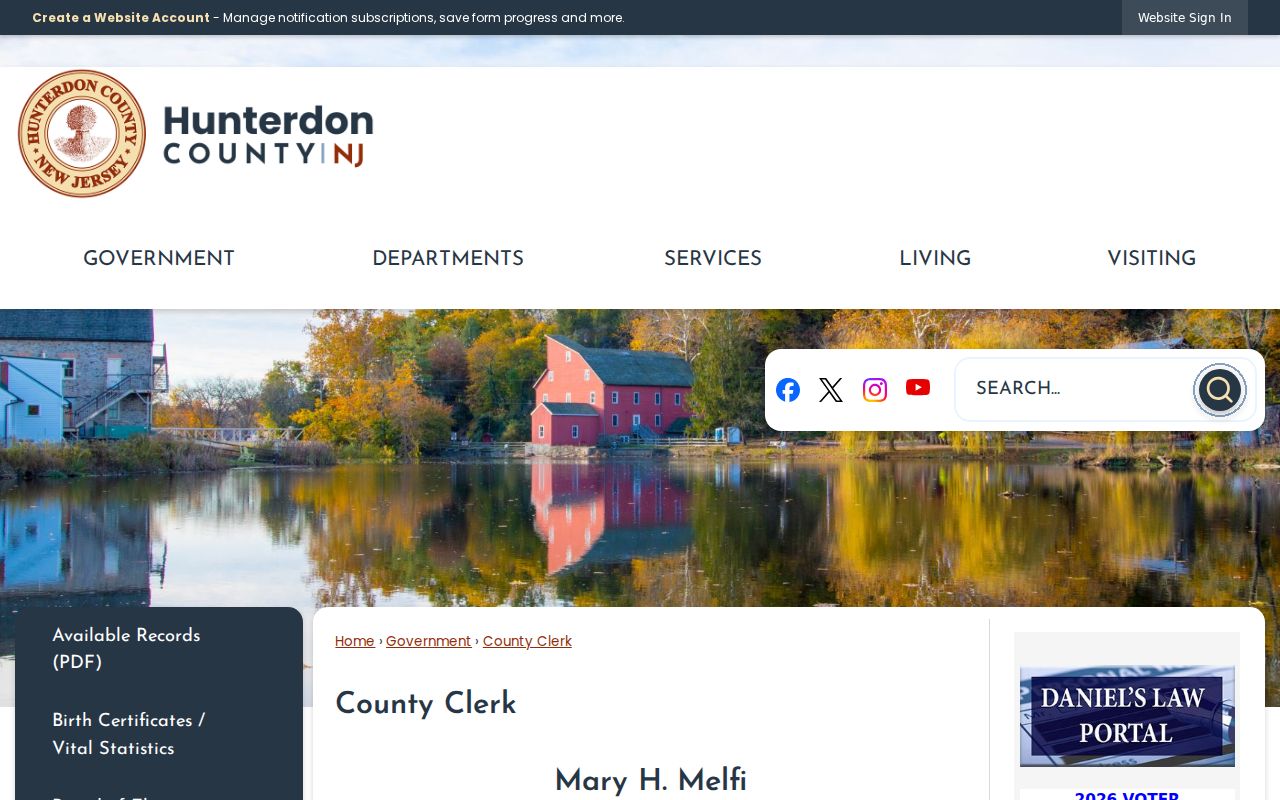
Use the Search Room when a web result stops short, because the office’s 1785-to-date statement is broader than any stated online index period.
Raritan Township Previous Residents Deed Trail
A chain of title is the sequence of recorded transfers for one parcel. It can establish former ownership, but it does not by itself prove who slept or received mail there. Work from the current owner backward. Match the municipality, block and lot, legal description, and recording date at each turn. Where a lot has been split, a plat or older legal description may be the only safe bridge to the prior parcel.
- Get the current owner, block, lot, and parcel location through the Assessor, the Township SDL property route, or the annual state tax-list view.
- Use the Clerk’s grantor-grantee index to find the current owner as grantee, then match the deed by parcel details and recording date.
- Read that purchase deed for the grantor, legal description, consideration, recording details, and book or instrument reference.
- Search that grantor as grantee to locate the earlier purchase, checking that the property description still matches.
- Repeat backward. When the needed image or index is not available online, request it from the Clerk or move to the documented microfilm sources.
- Grantor
- The person or entity transferring an interest in property through a deed.
- Grantee
- The person or entity receiving that interest. A current owner is commonly located as grantee on the purchase deed.
- Chain of title
- The linked sequence of transfers for the same parcel, read from a recent deed toward earlier deeds.
- Legal description
- The lot, block, metes-and-bounds, or other land description that identifies property beyond a street address.
For an older Raritan Township parcel, the legal description has more weight than a modern postal label. It also helps distinguish a former owner of the tract from a former owner of a later subdivision lot.
Raritan Township Earlier Deed Records
For deeds earlier than the locally convenient sequence, the New Jersey State Archives genealogy resources identify county deed microfilm through 1900 and note FamilySearch digitization of county deeds. The Archives is an access channel, not a reason to guess about an online cutoff at the County Clerk. Request the earlier record or search the appropriate microfilm when the County Clerk index points to a deed outside the material immediately at hand.
The Archives genealogy page below also directs researchers to land, census, estate, and other historical collections that can place a Raritan Township owner in a broader record trail.
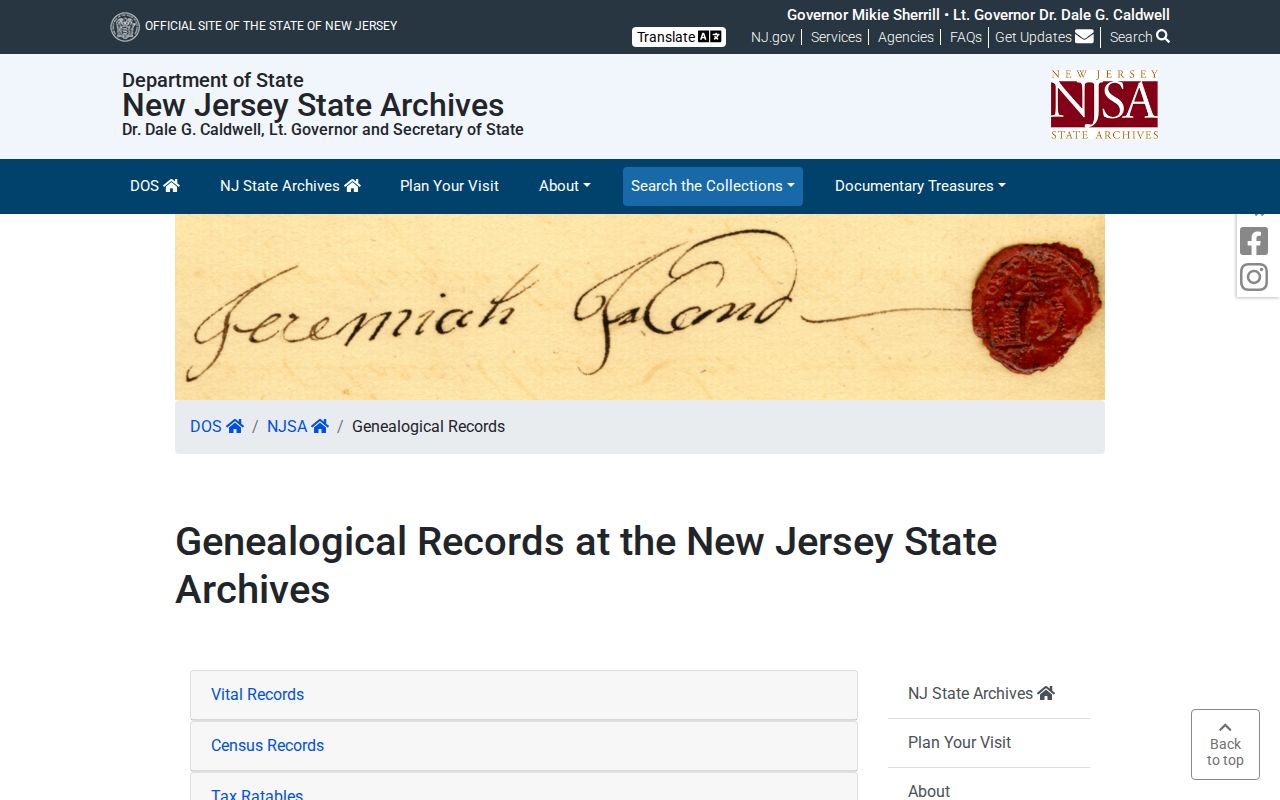
Microfilm and digitized deeds can continue a previous-residents title chain, while the original county record remains the source to verify when details conflict.
Raritan Township Past Resident Evidence
Ownership is only one part of the question of who lived here before. Federal census records can supply household composition and residence context. HCHS holds Hunterdon, Mercer, and Somerset federal census microfilm for 1830 through 1910, and the Archives describes census indexes through 1950. Pair a census year with the nearest dated record that genuinely identifies a person or location. A death notice, probate file, church entry, cemetery inscription, or newspaper item may help explain why a household appears or disappears.
- Write down the parcel’s historic owner name, legal description, and known date from the deed chain.
- Check the nearest census year for the surname, township, household composition, and residence context.
- Compare the result with a dated newspaper, estate, cemetery, or church source before attaching a household to the Raritan Township property.
- Use a directory only after inspecting that actual volume and confirming it includes an address or other relevant residential detail.
The Deats Memorial Library shown below is an appointment-based historical research resource. It is open to researchers without a general admission fee; visits are scheduled for Tuesdays except the second Tuesday and Thursdays, noon to 4 p.m., with contact requested at least one week ahead.
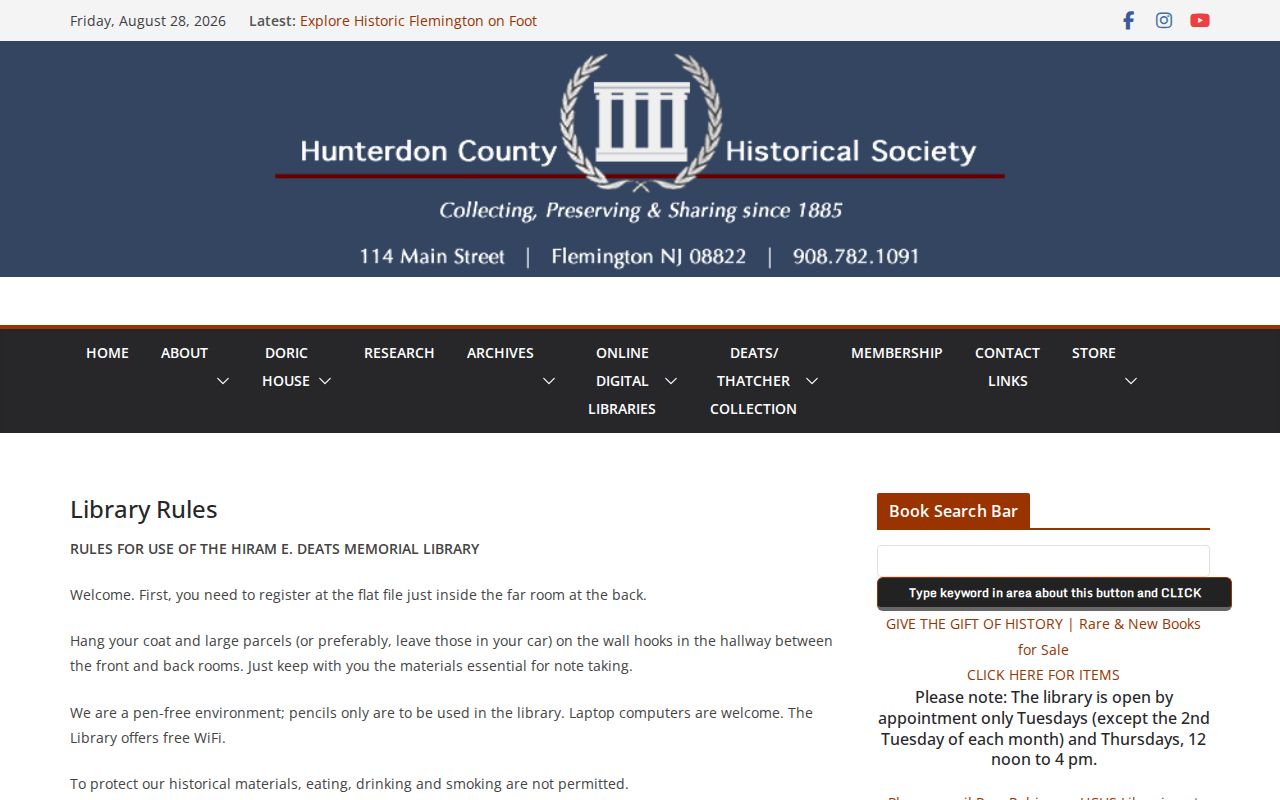
The library’s historical collections can add family and local context to a Raritan Township past-residents trail, but they do not replace the County Clerk’s parcel search.
Raritan Township Historical Records Context
The Hunterdon County Historical Society is valuable for context, not as a house-history service. Its holdings include more than 1,200 family folders, more than 400 family Bible records, more than 300 published and unpublished genealogies, tombstone inscriptions from more than 50 cemeteries, and 1,181 newspaper microfilm reels beginning in 1825. Its archive building at 67 River Road is in Raritan Township, but the Society directs researchers to the Deats Library for visits and appointments.
The Historical Society holdings page shown below describes the scale of those archival materials. Use them to test names, relationships, farms, roads, and local events after the parcel trail has supplied a date or family name.
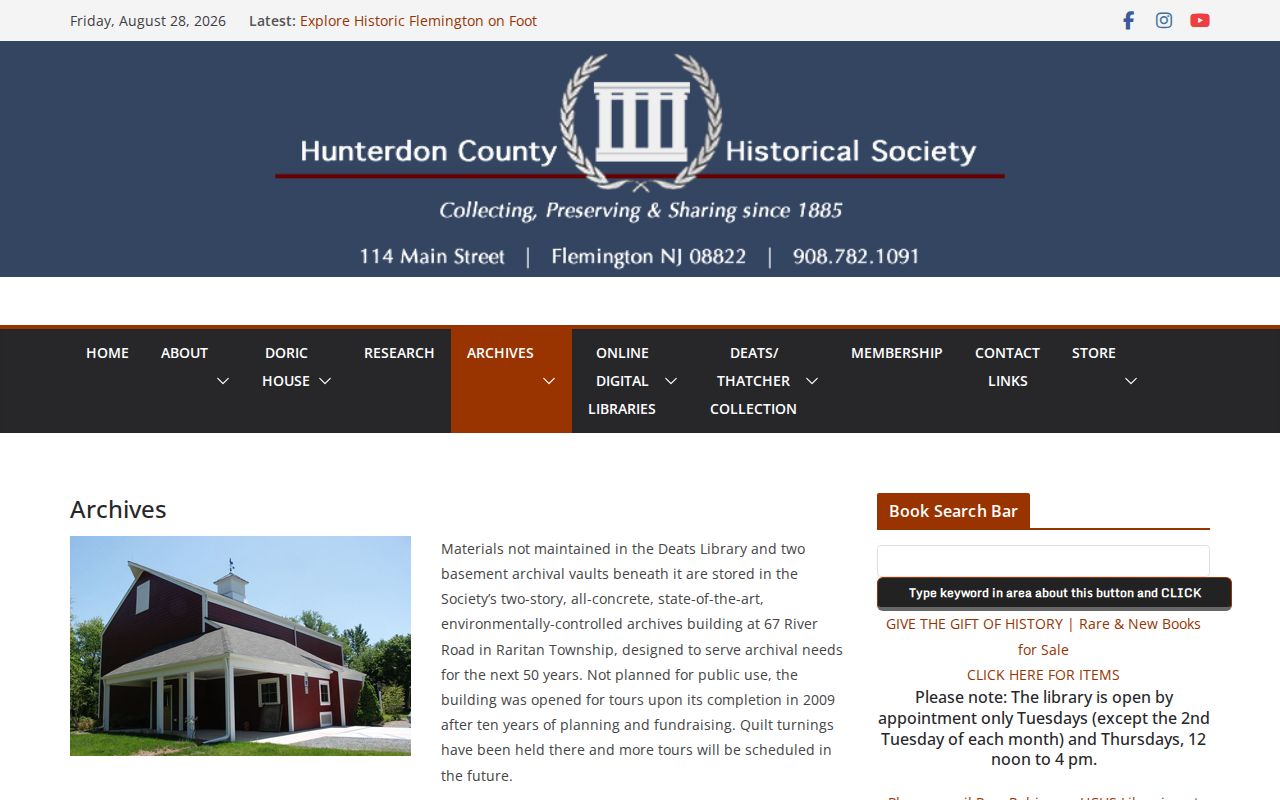
HCHS expressly does not research property histories. Direct a title or block-and-lot question to the County Clerk, then use the Society’s holdings for historical context.
Collection 270 deserves the same care. Its 1881 to 1997 run contains 36 county and municipal manuals with gaps, and it records officials, offices, and many annual budgets. It can identify local public roles and dates, but it is not a verified Raritan Township residential directory. A name in that collection is a useful lead for a broader records search, not evidence that the named person occupied the property in question.
Note: Historical Society materials can support a name trail, but they do not establish a complete Raritan Township residential directory.
Raritan Township Address Record Bridges
Raritan Township was incorporated in 1838, while Hunterdon County deed books begin in 1785. That mismatch explains why a parcel can have older county land records than the Township’s own municipal record system. Township Engineering maintains the official street and tax assessment maps and reviews metes-and-bounds descriptions, easements, and rights-of-way. Those materials can bridge a road, lot, or boundary change when a modern address fails to match an old deed.
The research did not verify a local street-renumbering year, a complete residential directory series, or Raritan Township Sanborn coverage. Do not fill those gaps with a familiar-looking address. Search the legal description, farm name, adjacent owners, and recorded plats instead. The historical collections themselves are described on the Raritan Township directory book page.
Raritan Township Previous Resident Limits
Use previous-residents research for family history, estate and heir questions, property history, or personal curiosity. Public-facing records can be incomplete, protected, sealed, or outdated. A deed confirms a recorded transfer, while a census or obituary can offer a dated household clue. Neither source alone proves a current address or grants permission to contact someone.